


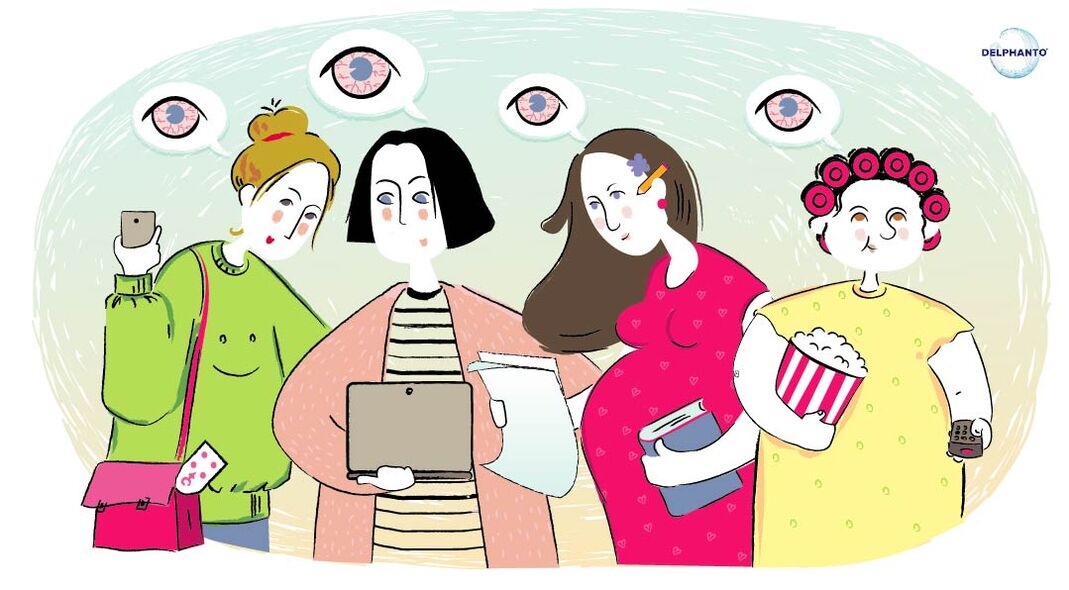
We perceive the world around us in all its diversity of colors with the help of our eyes.But over time, the contours of objects lose clarity and colors fade.This happens not because the world has changed, but because of a decrease in visual acuity.This problem can affect anyone.To prevent it, it is important to know how to improve your vision when it begins to decline.
How urgent is the problem of loss of vision sharpness?
According to statistics, more than 290 million people have poor vision, about 40 million are completely unable to see.In large cities, various visual dysfunctions are observed in 8 out of 10 residents, and in the world, at least 1 adult goes blind every 5 seconds.
The statistics are not at all encouraging and make us think very seriously about eye health.In 75-80% of cases, loss of visual function can be prevented if you undergo a course of therapy in the early stages of the development of ophthalmological diseases.
The reason for the decrease in visual acuity can be both the influence of the external environment and an unbalanced diet, hereditary predisposition, etc. But genetics cannot be deceived in any way, and other factors can somehow be “neutralized.”
Only a specialist knows how to improve vision and cure diseases that lead to vision loss.Therefore, every year it is necessary to carry out diagnostics to assess the health of the organ of vision and the entire body.
How to quickly improve your vision?
Everyone can minimize the harm of external factors and adjust their lifestyle.We have prepared for you the 10 most popular ways that will help improve vision and prevent its complete loss.
Don't forget about sun protection
Ultraviolet radiation, the main source of which is the sun, is invisible to the human eye.But contrary to the popular belief that only direct rays are harmful to the eyes, radiation reflected from surfaces is no less dangerous.Bright sun promotes faster evaporation of tear fluid.Therefore, in summer the feeling of dryness and burning often intensifies.
Many people do not suspect that prolonged exposure to the sun can lead to the development of conjunctivitis, photokeratitis (burn and inflammation of the cornea), and cataracts.But you can protect your eyes from the sun.To do this, you need to wear glasses that help minimize the harm of radiation at any time of the year.But only good glasses with UV 400 or UV 380 protection level can cope with ultraviolet radiation.
There are also glasses labeled with cosmetics.But they have nothing in common with eye protection products from ultraviolet radiation.These are more of an image accessory than sunglasses.
Protect your eyes from injury
When working with open fire, chemicals, or a welding machine, do not forget about eye protection.Without glasses, you cannot perform work that poses a risk to the organ of vision, because you can get injured or burned.
You also need to remember to take precautions when working with stone chips, shavings, and any small objects that can damage your eyes.Special glasses are useful not only at work, but also at home.
Take vitamins that improve vision
Vitamins such as A, D, C, E are considered extremely useful for the visual system. Minerals, such as zinc, also provide benefits.These active substances help prevent macular degeneration (responsible for central vision).
Cold-pressed vegetable oil will also be beneficial for the visual system.This could be fennel oil, pumpkin oil, or pine nut oil.To reduce the risk of developing cataracts, you need riboflavin, vitamin B2, and beta-carotene.These substances are present in tomatoes and watermelons.
To maintain eye health, you should also eat other foods that improve vision.These can be natural sources of omega-3 fatty acids (salmon and flax seeds), fresh fruits and vegetables (carrots, broccoli, red peppers, kale, sweet potatoes, citrus fruits, strawberries).It is difficult to say definitively which foods improve vision.But the diet of a person who wants to preserve it must contain vitamins and minerals that are important for the body.
Take a break from the computer
Many people, after a working day spent in front of the monitor, sit down in front of the computer again at home to finish their work or just watch their favorite movie.But such loads on the visual apparatus are unacceptable.
The 20x20x20 rule will help reduce the negative consequences of eye strain.It can be easily deciphered: when working with digital information, every 20 minutes you need to take a break for 20 seconds.At this time, you should look at an object located 20 meters away from you.
It is useful to blink frequently during visual stress, because when performing tasks that require high concentration of attention, the frequency of blinking is reduced.Because of this, the tear film quickly evaporates and discomfort appears.
If the work and rest regime at the computer is violated, dry eye syndrome (DES) may occur.This condition is usually treated with eye drops.But they are not capable of improving vision or providing the eyes with sufficient moisture.Drops are only a temporary measure to eliminate the unpleasant symptoms of dry eye syndrome.Such drugs do not normalize tear production, therefore they are suitable only for symptomatic treatment of dry eye syndrome.
Don't forget about eye exercises
After long, monotonous work at the computer, it is useful to give your eyes a “training session.”Visual gymnastics consists of simple exercises that help relieve severe tension from the eye muscles and get rid of the feeling of heaviness.Incorporate three simple exercises into your daily routine:
- Squeezing your eyes shut.While sitting on a chair, close your eyes tightly for a few seconds and open your eyes again.Repeat the exercise 8-10 times with a break of 5-10 seconds between sets.
- "Running eyes."Stand on your feet and slowly move your gaze from side to side, from bottom to top.
- Blinking.Try to blink your eyes very often for 1-2 minutes.Despite the simplicity of this exercise, it is very useful, because it helps stimulate blood circulation in the eye tissues.
Is it possible to improve vision with gymnastics?Of course, exercises will not help restore 100% vision in 5 minutes, even if you do them every day.But periodic training of the visual apparatus will help prevent the development of serious ophthalmological diseases.
Of course, exercises will not help completely restore vision, but they can relieve muscle tension, stimulate the tear ducts, and improve nutrition and blood supply to tissues.
But eye exercises are not always beneficial.It should not be done in cases of retinal detachment, inflammatory ophthalmological diseases, or immediately after surgical treatment of eye pathologies.Overstrain of the visual apparatus in the presence of such conditions can only aggravate its condition.
Control your body weight
Excess weight can be one of the reasons for the deterioration of the visual system.As paradoxical as this may sound, it is true.Many obese people suffer from type 2 diabetes, which leads to the development of diabetic retinopathy.When there is a lot of sugar in the blood, the walls of the arteries in the retina are damaged.Because of this, vision becomes worse.
Another complication of diabetes that can cause poor vision is neuropathy.It can affect any part of the nervous system, including the nerves of the visual apparatus.Weight control and physical activity help prevent the development of type 2 diabetes and its eye complications.
Obesity is also often accompanied by hypertension, which in turn also negatively affects the visual system.To normalize blood pressure, you need not only to take special medications, but also to perform physical exercises that will help control your weight.
Giving up bad habits will help maintain visual acuity
Smoking, drinking alcohol and other bad habits are harmful to health.They also suffer greatly from gas.For example, smoking can increase the risk of developing cataracts and age-related macular degeneration.But not only nicotine is harmful, because cigarette smoke irritates the mucous membrane and can even contribute to its dehydration (drying out).
But this can be avoided by giving up bad habits.The fact is that the eye vessels are able to recover after quitting cigarettes.So think about your health before you smoke another cigarette.
Don't forget about antioxidants
Every day, the visual system is exposed to oxidative stress, which anthocyanins help neutralize.These beneficial antioxidants are present in various berries, such as cherries, blueberries, blueberries, and currants.They help reduce the risk of developing dry eye syndrome (DES).
This disease is characterized by a decrease in the production of tear fluid and (or) a change in its composition.Normally, the precorneal film should nourish, moisturize, and protect the cornea.But due to a lack of tears, it quickly loses stability, becomes thin or completely atrophies.
Increased evaporation of tears causes the protective film to dry out.Typical symptoms of dry eye appear: itching, redness, burning sensation, lacrimation, foreign body sensation, etc. If left untreated, dry eye can lead to inflammatory eye diseases, damage to the cornea, and even the appearance of ulcers on its surface.
Researchers from Japan have found that the most effective source of eye-healthy antioxidants is Aristotelia chilean extract.It contains delphinidins, which have a direct effect on the lacrimal glands and help improve their functioning.They absorb free radicals that damage tear gland cells and neutralize the effects of oxidative stress.This helps reduce the risk of developing diabetic rhinopathy, glaucoma, macular degeneration, cataracts and other diseases that can lead to loss of visual function.
Analyze heredity
If one of your relatives (grandparents, parents) had vision problems, there is a chance that this problem will be inherited.This is especially true for macular degeneration, glaucoma, and optic nerve atrophy.
These diseases most often have a genetic nature.Therefore, if someone in your family has had such a diagnosis, you need to pay special attention to prevention.
Remember hygiene
The visual organs are very sensitive to infections and pathogenic microbes.Therefore, everything that comes into contact with the eyes should be as clean as possible: hands, handkerchiefs, towels, etc.And, of course, contact lenses.It is necessary to strictly follow the rules for caring for them, regularly disinfect them and change them after the end of their service life.
Lenses should be changed in accordance with the manufacturer's recommendations and disinfected regularly.Otherwise, there is a risk that you will simply get an infection in your eyes.